

New Delhi: The debate over the Uniform Civil Code (UCC) has gained fresh momentum after Union Home Minister Amit Shah said the BJP-led National Democratic Alliance (NDA) plans to implement the UCC in all 21 NDA-ruled states before the 2029 Lok Sabha elections.
Shah made the announcement in Mumbai on September 13, 2026, saying he was confident that the Uniform Civil Code would be implemented across all 21 states governed by the BJP-led NDA before the next general election. The statement has placed the UCC back at the centre of India’s political and legal debate and has also brought the positions of NDA allies under renewed scrutiny.
The latest announcement comes after a series of developments at the state level. Uttarakhand has already brought a comprehensive UCC into force, while Gujarat and Assam have moved legislation through their respective state assemblies in 2026. These developments have turned what was once largely a national political debate into an issue involving concrete changes to civil law in individual states.
What is the Uniform Civil Code?
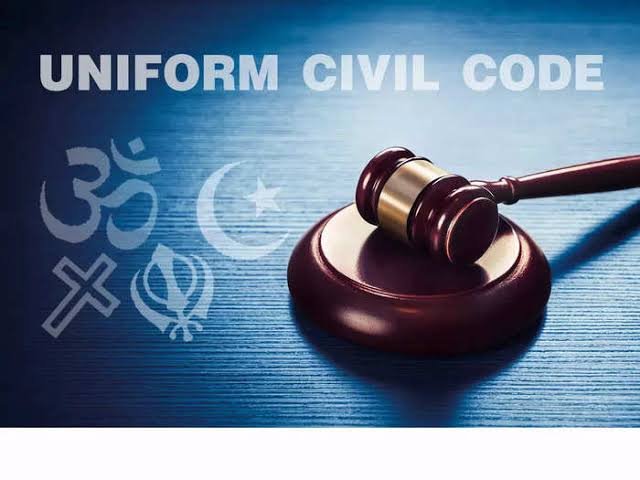
The Uniform Civil Code refers to a common framework of civil or personal laws governing matters such as marriage, divorce, inheritance, succession and adoption, regardless of a person’s religion.
India currently has a system in which several personal matters are governed by different laws and legal traditions applicable to different religious communities. The UCC debate centres on whether these areas should instead be governed by a common set of rules applicable to citizens irrespective of their religious identity.
The idea is mentioned in Article 44 of the Constitution of India, which says that the State shall endeavour to secure a uniform civil code for citizens throughout the territory of India. Article 44 is part of the Directive Principles of State Policy and is therefore not, by itself, an immediately enforceable fundamental right.
The political debate surrounding the UCC, however, has continued for decades.
Supporters argue that a common civil framework could strengthen equality before the law, particularly in areas involving marriage, divorce, inheritance and family rights. Critics have questioned whether one set of rules can adequately accommodate India’s enormous diversity of religious practices, customary laws and community traditions.
Amit Shah’s 2029 deadline changes the political conversation
The most significant recent development came from Amit Shah’s September 13 announcement.
The Home Minister said that the UCC would be implemented in all 21 states governed by the BJP-led NDA before the 2029 Lok Sabha elections. The statement effectively gives the NDA-ruled states a political target for expanding the policy beyond the states where legislation has already been introduced or implemented.
The announcement is particularly significant because the government is currently pursuing the UCC largely through state-level legislation rather than introducing a single nationwide UCC law in Parliament.
That approach means the legal framework may develop through individual state laws, with each state having to address its own legislative, administrative and political circumstances.
The state-by-state route also allows governments to introduce, debate and modify provisions based on local requirements and political responses.
Uttarakhand became the first state to implement UCC
Uttarakhand is currently the clearest example of a state where the UCC has moved from political discussion to an operational legal framework.
The Uniform Civil Code, Uttarakhand, 2024 came into force on January 27, 2025, making Uttarakhand the first state in independent India to implement a comprehensive UCC. The state government has established rules covering areas including marriage, divorce, maintenance, inheritance and related civil matters.
The Uttarakhand government describes the framework as an attempt to establish uniformity in personal civil matters irrespective of religion or community.
The state’s UCC system also includes provisions concerning registration of marriages and live-in relationships, among other areas.
The implementation has not ended the debate. Instead, Uttarakhand has become a practical reference point in the national discussion, with supporters pointing to the state as evidence that a common civil framework can be implemented at the state level, while critics continue to question several provisions and their wider social implications.
The state has also continued to amend and update its UCC framework. Government records show further amendments and administrative changes during 2025 and 2026.
Gujarat passes UCC Bill
Gujarat became another major state in the UCC debate when its Legislative Assembly passed the Gujarat Uniform Civil Code Bill, 2026, in March.
The legislation was passed after a lengthy debate in the Assembly, with the Opposition raising objections and seeking wider examination of the proposed law. Gujarat’s Bill seeks to establish common rules covering areas including marriage, divorce, succession, inheritance, adoption and live-in relationships.
The legislation also contains provisions concerning Scheduled Tribe communities.
The passage of the Gujarat Bill was politically significant because the state became the second state in independent India after Uttarakhand to move ahead with a dedicated UCC law.
The Gujarat debate also demonstrated the political divisions surrounding the issue. Supporters presented the legislation as a measure aimed at equality and gender justice, while Opposition members questioned its implications for religious and personal laws.
Assam becomes the first northeastern state to pass UCC legislation
Assam added another major development to the UCC debate in May 2026.
The Assam Legislative Assembly passed the Uniform Civil Code, Assam, Bill, 2026, making Assam the first state in the Northeast to pass UCC legislation. The Bill was passed on May 27 after debate in the Assembly and opposition protests.
The proposed framework deals with areas including marriage, divorce, succession and live-in relationships.
One of the significant features of the Assam legislation is its treatment of Scheduled Tribes. The Bill excludes Scheduled Tribes from its provisions, reflecting the government’s stated consideration of existing constitutional protections and customary practices.
The Assam legislation also generated controversy over provisions concerning live-in relationships and other personal matters. Opposition members called for greater consultation and sought to send the Bill to a select committee before its passage.
The Assam development therefore highlights an important aspect of the national UCC debate: a “uniform” civil framework can still contain specific exemptions or provisions designed to account for protected communities and customary practices.
Why the UCC is politically important
The UCC has been a long-standing issue in Indian politics, particularly for the BJP, and is frequently discussed alongside other major issues that have formed part of the party’s broader political agenda.
The latest 2029 target announced by Amit Shah gives the issue renewed political importance.
If the NDA succeeds in implementing UCC legislation across all 21 NDA-ruled states before the 2029 election, the country could see a significant expansion of common civil-law frameworks at the state level.
However, implementation will not necessarily be identical across every state.
States have different social structures, tribal populations, customary practices and political circumstances. The experience of Uttarakhand, Gujarat and Assam already shows that UCC legislation can include provisions tailored to particular communities and state-specific circumstances.
Why supporters back the UCC
Supporters of the Uniform Civil Code argue that citizens should be governed by common civil rules rather than different personal laws based on religion.
One of the main arguments is equality before the law.
Supporters also say that common rules could simplify the legal framework for marriage, divorce, inheritance and succession. They argue that certain personal-law provisions can create unequal outcomes, particularly for women, and that a common framework could provide stronger and more consistent legal protection.
The issue of gender justice has been repeatedly highlighted by governments supporting UCC legislation.
In Assam, for example, the state government described the legislation as a step towards gender justice, while the Gujarat government similarly presented its Bill as part of an effort to establish equal rights and reduce discrimination.
Why critics oppose or question the UCC
Opposition to the UCC is based on several different arguments.
Critics argue that India’s religious and cultural diversity makes a single civil framework difficult to design without affecting established community practices.
Some minority groups and political parties have expressed concern that a common code could interfere with religious freedom or personal laws protected under India’s constitutional framework.
The debate is therefore not simply about whether laws should be uniform. It also concerns how such uniformity is designed, which practices are retained, which are changed and how protected communities are treated.
Recent state-level debates have demonstrated these concerns.
In Gujarat, Opposition members argued against the Bill and demanded greater scrutiny. In Assam, Opposition legislators also raised concerns about the provisions and sought wider consultation before the legislation was passed.
NDA allies raise questions over implementation
A fresh political challenge for the Centre is the position of some NDA allies.
Although the BJP-led alliance has 21 state governments in its broader political camp, support for UCC implementation is not necessarily uniform among alliance partners.
Recent reporting has highlighted differences within the NDA following Amit Shah’s announcement. JD(U), an important NDA ally, has indicated reservations about implementing UCC in Bihar and is seeking discussions with the Centre. LJP leader Chirag Paswan has also called for the views of stakeholders to be considered.
These differences could become important as the 2029 deadline approaches.
The UCC may therefore require not only legislative preparation but also political negotiations within the NDA itself.
UCC and India’s constitutional framework
The constitutional position is another important part of the discussion.
Article 44 places the idea of a uniform civil code within the Directive Principles of State Policy. These principles guide the state in policymaking but are not enforceable by courts in the same manner as fundamental rights.
At the same time, any UCC legislation must operate within the broader constitutional framework, including provisions relating to equality, religious freedom and protections for communities.
This is why the implementation of UCC is not simply a question of passing a law. The detailed provisions, their constitutional validity and their application to different communities are all likely to remain important subjects of legal and political scrutiny.
The national debate is likely to intensify
Amit Shah’s 2029 announcement has ensured that the UCC will remain a major political and legal issue over the next few years.
The immediate challenge for the NDA governments will be translating the political commitment into legislation and administrative rules across the remaining states.
The experiences of Uttarakhand, Gujarat and Assam are likely to influence that process.
Uttarakhand provides the example of a UCC that is already operational. Gujarat has demonstrated how a large western state has legislated on the issue, while Assam has brought the debate into the Northeast with provisions that specifically address the region’s social and tribal context.
At the same time, the objections raised by political parties, community groups and NDA allies indicate that implementation is unlikely to be politically straightforward.
What happens next?
The next phase of the UCC debate is expected to focus on how individual NDA-ruled states respond to the Centre’s political target.
Some states may begin drafting legislation, while others could first conduct consultations with legal experts, communities and stakeholders. The final form of the laws could also differ from state to state depending on local requirements and constitutional considerations.
The government’s stated objective is clear: Amit Shah has set a target of having UCC implemented across all 21 NDA-ruled states before the 2029 Lok Sabha election.
Whether that target can be achieved will depend on legislative processes, political negotiations, administrative preparations and the response of different communities.
For now, the Uniform Civil Code has moved well beyond being only a theoretical constitutional objective. With Uttarakhand’s law already in force and Gujarat and Assam having passed their Bills in 2026, the country is entering a new phase of the UCC debate.
The coming years will determine whether the NDA can expand the model to the remaining states and whether a broader political and social consensus can emerge around one of India’s most consequential questions concerning personal and civil law.
The Diplomat India will continue to track developments around the Uniform Civil Code, including new state legislation, political negotiations, legal challenges and changes to the existing state-level frameworks.