
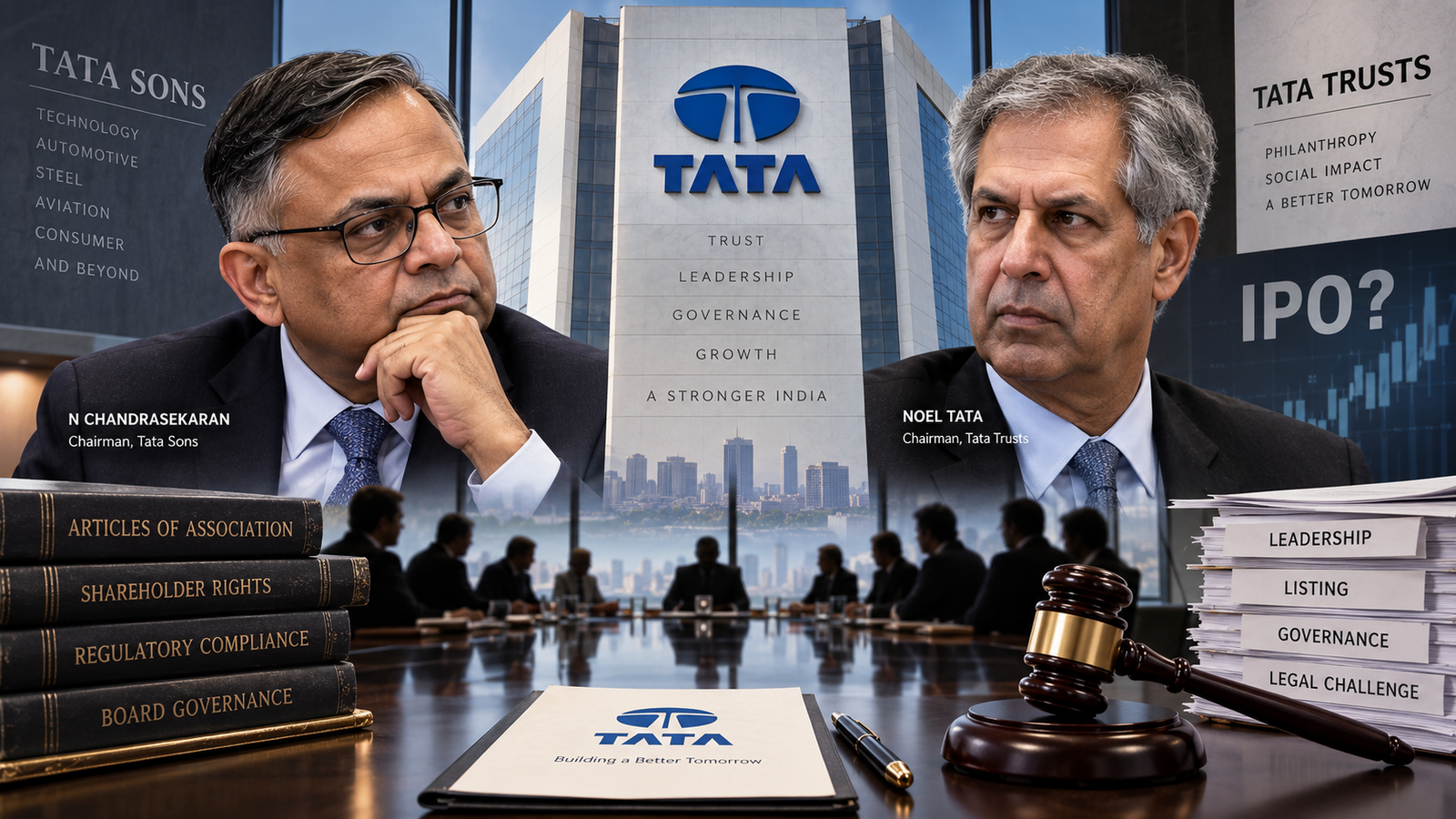
The TATA Group has become involved in a dispute that concerns Tata Sons, Tata Trusts, leadership, governance and a potential public listing.
The dispute began when the directors of Tata Sons chose to extend the term of N Chandrasekaran by five years as chairman.
Tata Trusts Chairman Noel Tata questioned the decision. Criticized the re‑appointment of N Chandrasekaran.
The dispute also involves the decision by Tata Sons to prepare for a stock market listing under pressure.
How the Tata Boardroom Dispute Got Started
The current conflict has grown over months because of disputes about leadership, business performance, governance and the future structure of Tata Sons.
Earlier discussions revealed differences between N Chandrasekaran and Noel Tata about the term of N Chandrasekaran.
At first N Chandrasekaran announced that he would not seek another term as chairman of Tata Sons.
The leadership issue re‑emerged when the directors of Tata Sons revisited the succession plan.
On September 17 the board of Tata Sons approved another five‑year term for N Chandrasekaran.
The decision received four votes while Noel Tata opposed the proposal.
Why Noel Tata Opposed Chandrasekaran’s Reappointment
Noel Tata represents Tata Trusts on the board of Tata Sons. Chairs Tata Trusts.
Tata Trusts owns two‑thirds of Tata Sons giving it influence in the holding company.
Noel Tata argued that the board did not receive the support of Tata Trusts’ nominee directors.
Tata Trusts thus challenged the validity of the September 17 resolution.
Tata Trusts also questioned N Chandrasekaran’s use of a casting vote when making the decision.
The dispute mainly concerns the Articles of Association of Tata Sons and its voting requirements.
The Fight Over Tata Sons Listing
At the Tata boardroom apart from the leadership of N Chandrasekaran the dispute also involves the possibility of listing Tata Sons on the stock market.
The Reserve Bank of India has classified Tata Sons as an upper‑layer non‑banking company.
As a result qualifying companies must pursue a listing within the period.
Tata Sons sought deregistration to avoid the listing. The RBI refused the request increasing the pressure on Tata Sons to follow the regulations.
Tata Sons therefore took steps to prepare for a listing during its September 17 board meeting.
The decision on a listing caused another disagreement between Tata Sons and Tata Trusts.
Why Tata Trusts Worries About the Listing
Tata Trusts expressed concerns about how a public listing could affect the structure of the Tata Group and its philanthropic objectives.
Tata Trusts owns a shareholding in Tata Sons. Has traditionally played an important role in the group.
A public listing could bring scrutiny from shareholders. Add market pressure on the decisions of Tata Sons.
Listing could also change how investors view the role of Tata Sons within the Tata Group.
At the time Tata Sons must obey requirements that may limit its ability to stay private.
Tata Trusts Faces Internal Differences
The dispute also uncovered differences among the people involved in Tata Trusts.
Reports say there have been disagreements between the nominees of Tata Trusts on the issue of N Chandrasekaran’s continuation and the listing question.
These disagreements complicate the governance situation for Tata Trusts.
The internal divisions also affect the ability of Tata Trusts to take a position in Tata Sons.
The Role of Tata Sons
Tata Sons functions as a holding company for the Tata Group.
Tata Sons owns businesses in technology, automobiles, steel, aviation, consumer products and other areas.
Companies associated with the group include Tata Consultancy Services, Tata Motors, Tata Steel, Air India and Tata Electronics.
Therefore disagreements within Tata Sons can influence the decisions of its businesses.
The current dispute mainly deals with governance, succession, shareholder rights and compliance.
Why the Articles of Association Matter
The Articles of Association of Tata Sons contain provisions that govern the relationship between Tata Sons and Tata Trusts.
These provisions are key to the dispute over N Chandrasekaran’s re‑appointment.
Tata Trusts argues that the provisions require support from its nominated directors.
Tata Sons and Tata Trusts face a dispute over the governance provisions and the legal interpretation may decide whether the September 17 board decision survives any challenges.
The Legal Battle Could Move to Court
Tata Trusts has challenged the validity of the board’s decision and may move the case to court.
Senior lawyers Harish Salve and Abhishek Manu Singhvi have already spoken publicly about the dispute.
Singhvi has highlighted the shareholder rights of Tata Trusts while commenting on the Supreme Court’s Tata‑Mistry judgment.
Salve has raised issues about the separation, between trustees and corporate management.
A court battle might examine both law and the internal governance rules of Tata Sons.
Connection With the Cyrus Mistry Dispute
The current dispute in the Tata boardroom has brought back the conflict involving Cyrus Mistry.
The present dispute inside the Tata boardroom has revived the conflict about Cyrus Mistry.
In 2016 the Tata Sons board removed Cyrus Mistry from the chairman role, which started a fight.
Later the Supreme Court decided in favour of Tata Sons in the Tata‑Mistry case.
The 2021 judgment also talked about the rights of Tata Trusts inside Tata Sons.
That earlier judgment matters now because each side looks at governance rights differently.
What Happens Next
The board meeting on September 17 did not completely fix the leadership problem for Tata Sons.
The dispute may shift to asking shareholders for approval following rules and ongoing talks between Tata Sons and Tata Trusts.
The company must also think about steps that involve a listing.
Future big changes may involve courts, shareholders, regulators and Tata Trusts.
The conflict has left Tata Sons’ governance structure and future leadership unclear.
Why This Dispute Matters
The Tata Group runs companies and businesses in India and across the world.
Tata Sons sets strategy for many of these businesses.
A long governance dispute could therefore affect decisions for the Tata Group.
Investors will watch the leadership issue listing plans, shareholder decisions and any legal steps.
The dispute also raises questions, about how big business groups govern themselves.
For Tata the immediate challenge is balancing shareholder rights, board power, regulatory rules and the long‑term interests of the group.