

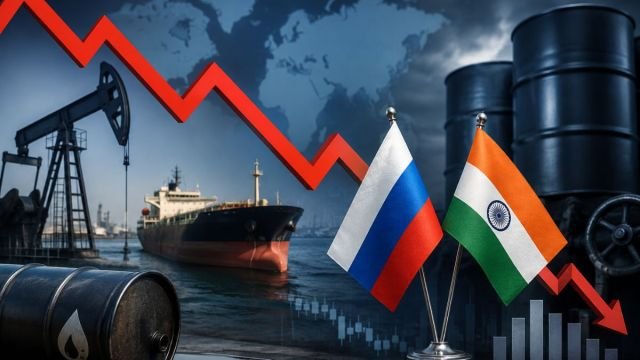
India has curtailed Russian crude oil imports by 26.3% in the volume from its peak set last month.
Russian Crude Imports Falls
Russian crude by Indian refineries averaged 2.08 million barrels/day in August.
Upward to 2.82 million barrels/day in July, signifying that there was a significant drop of 26.3% from the peak set in the previous month. At the same time, Russia’s share in India’s overall crude basket has declined from 55.9% to almost 45%.
India’s total crude imports fell by 8.4% to about 4.62 million barrels/day in August.
China Intensifies Competition
Chinese buyers have ramped up purchases of Russian oil and is getting on the heels of rising refining profits which make the Russian crude an attractive option to cut costs.
A surge in Chinese purchases threatened to tighten supplies and drive up prices for India.
Sinopec has ramped up its Russian oil purchases due to soaring refining margins. This should make Russian crude more expensive for Indian buyers.
Russian Goods Are Getting Scarce
Ukraine’s drone strikes impact Russia’s oil infrastructure and hurt its export capacity. In addition, Russia’s domestic refining output has soared, curtailment its exports. Meanwhile, shipping costs and risks have skyrocketed, making Russian crude less attractive for Indian buyers.
India’s oil refiners are said to turn to other sources to supplement Russian crude, including Venezuelan crude, Iraq, UAE, Angola, and Kuwait.
Venezuelan oil tankers have set a record for the number of barrels exported to India.
The shift to other suppliers could be a means of reducing Russia’s role as a supplier for India. However, it is a risk that the cost of procuring oil will climb if discounts shrink.
India’s oil demand is estimated at 249 million barrels for the whole year.
Russian crude is a critical source of supply for India’s thriving refining sector. India continues to buy Russian crude oil despite soaring prices. However, the recent contraction in its share in India’s overall imports is a sign that buyers are cooling toward the discount product.
India’s refined products market is highly competitive and prices are susceptible to swings in crude prices. Any increase in the price of feedstock threatens to erode refinery margins. Consequently, India will remain on high alert about shifts in Russian crude pricing as well as other potential suppliers.