
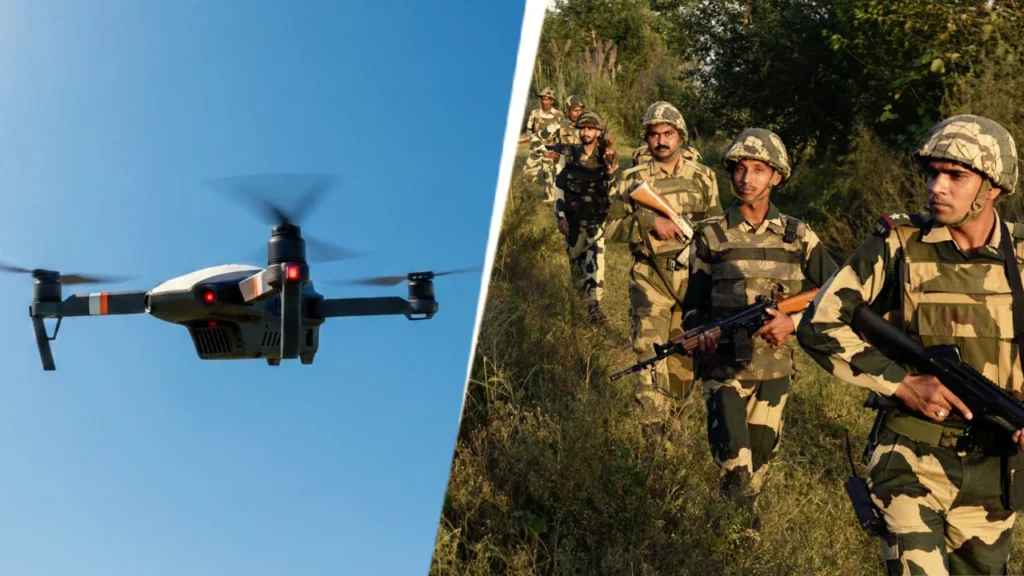
What Are Anti-Drone Measures ?
Border anti-drone measures simply mean the steps taken by security forces to detect, track and stop suspicious drones near the border. It is formally called as a COUNTER-UNMANNED AIRCRAFT SYSTEM (C-UAS).
With the increasing use of drones, border security has become more challenging. Small drones can fly at low heights, carry materials across borders, and sometimes avoid traditional surveillance methods. This has made anti-drone technology an important part of modern border security.
Border anti-drone measures is a kind of system or technologies for our security procedures used to detect, identify, track and respond to unauthorized drones near a country’s border. The main purpose is to know when a suspicious drone is approaching and prevent it from becoming a security threat.
Pakistani Drone Spotted Over Kathua Border Villages
On 4 August 2026, security forces in Jammu & Kashmir went on high alert after a suspected Pakistani drone entered Indian airspace and was seen hovering over the forward villages of Shukhmal, Devindera and Tapan in the Bobiyan area of Kathua’s Hiranagar sector, close to the International Border. The drone was reportedly spotted at around 2 pm.
The Border Security Force (BSF) immediately initiated counter-drone measures to try to bring the drone down. However, officials said the drone was flying at a high altitude and eventually returned across the border. Security forces then conducted a detailed search of the surrounding area to check whether the drone had dropped weapons, ammunition, narcotics or other material. No such airdrop was reported in the information available at the time.
Pakistani Drone Recovered With Weapons in Fazilka
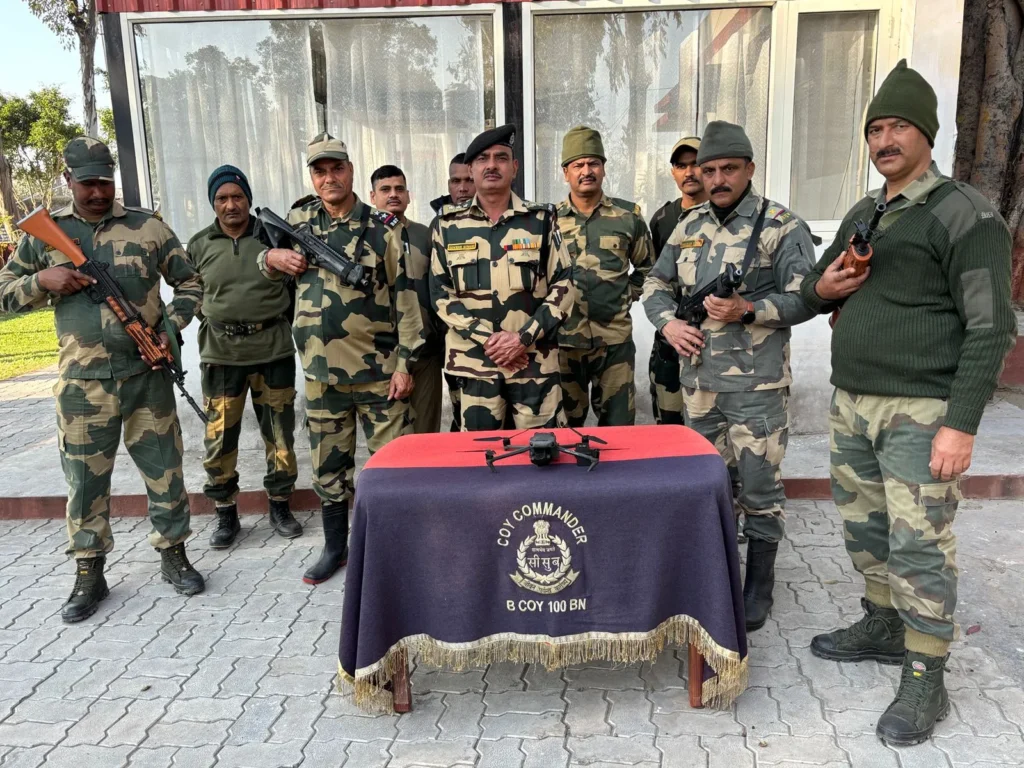
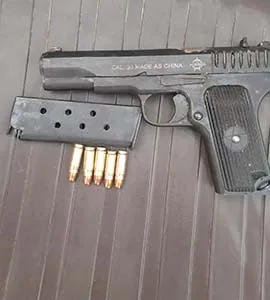
On 8 August 2026, a suspected Pakistani drone was found in Fazilka Punjab, near the India–Pakistan border. The BSF and Punjab Police recovered the drone from an agricultural field near Tahliwala village and with it they also found China-made pistol, two magazines and four live cartridges. The incident raised concerns that drones are being used to secretly send weapons across the border without people having to physically cross it.
This incident also shows why anti-drone systems are becoming increasingly important for India, especially in border areas of Punjab. Security forces now have to deal with threats coming not only from the ground but also from the sky. By using technologies that can detect, track and stop suspicious drones, authorities can respond more quickly and prevent weapons or drugs from reaching their Homes.
Why Are Anti-Drone Systems Important ?
- Anti-drone measures can help security forces:
- Detect suspicious aerial activity earlier
- Protect border personnel and nearby communities
- Reduce drone-based smuggling
- Protect sensitive military and government locations
- Improve overall border surveillance
- Respond more quickly to potential threats
Anti-drone security is not always easy. Small drones can be difficult to detect, and legitimate drones may operate in the same area. Weather, terrain and communication conditions can also affect detection systems. Another challenge is that counter-drone technology must be used carefully so that it does not interfere with legitimate aircraft or communication systems.
How India is Building a Stronger Shield Against Rising Drone Threats ?
India is increasingly using anti-drone systems for the protection of borders from growing aerial threats. These systems combine technologies such as radar, cameras, radio-frequency sensors and other detection tools to identify and track suspicious drones. Security forces can then take authorized counter measures when a drone is found to pose a threat. This technology is especially useful in areas where drones have been linked to the smuggling of drugs, weapons and other illegal materials.
So, Anti-Drone technology for India is more than just a defence tool—it is becoming an important part of modern border security. It gives security forces an extra layer of protection and helps them respond more quickly to threats from the sky. As drones continue to become smaller, cheaper and more advanced, India will need to keep improving its detection systems, training personnel and strengthening coordination between security agencies.
