On August 16, 2026, Burari in Delhi witnessed a “Chakka Jam” as around 200 local residents came onto the streets to protest against poor roads, drainage problems and waterlogging. The protest took place near Burari Chowk and was organised under the banner “Voice of Burari.” For the people living there, this was not simply a political gathering. It was a way of saying that their everyday problems could no longer be ignored.
For years, residents have complained about the condition of important roads in the area. The 100-foot Road was particularly highlighted during the protest. Potholes, incomplete drainage work and waterlogging have made normal travel difficult, especially during the monsoon. For a student trying to reach college, an employee travelling to work, or a parent taking a child to school, a damaged and waterlogged road is not a small inconvenience. It can mean delays, accidents, vehicle damage and considerable stress.
The residents decided to come together because they wanted time-bound action rather than repeated promises. They submitted a memorandum to the Lieutenant Governor’s office and asked the authorities to complete pending road and drainage work within a fixed period. They also demanded regular information about the progress of the work. According to the latest report, the protesters warned that if their concerns were not addressed by September 16, they could intensify their peaceful agitation.
The Political Side of the Protest
The protest also turned attention towards political accountability. Some residents demanded the resignation of Burari MLA Sanjeev Jha, blaming the poor condition of the area on years of inadequate civic action. The issue became more than a complaint about roads; it became a question of who should be responsible when basic public facilities do not work properly.
At the same time, it is important to understand that road and drainage problems can involve several government departments and agencies. This is why coordination between elected representatives, civic authorities and residents becomes important. Instead of waiting until frustration turns into a road blockade, authorities need effective systems for receiving complaints, inspecting problems and completing repair work within a clear deadline.
How the Chakka Jam Affected Daily Life ?
A road blockade naturally affects people who are not part of the protest as well. Traffic movement around the protest area can slow down, creating difficulties for commuters and local businesses. On August 16, social-media footage and reports showed traffic disruption around the protest before the protesters moved back towards Burari.
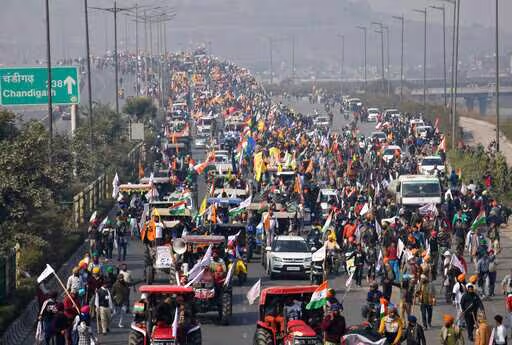
However, the disruption also brought attention to an issue that residents say has been affecting them for much longer. This creates a difficult balance: people have the right to peacefully raise their concerns, but protests should also minimise inconvenience to ordinary commuters and emergency services.
What Happens Next ?
The most important question now is whether the authorities will act before the deadline given by the protesters. Residents have asked for road repairs, drainage improvements and a clear timeline for completing the work. The response from the administration in the coming weeks will determine whether the situation settles down or whether the protest becomes larger.
The Burari Chakka Jam therefore should not be seen only as a Delhi traffic or political story. At its heart, it is about something much simpler: people wanting the roads outside their homes to be safe, the drains to work and their daily lives to become easier.
