



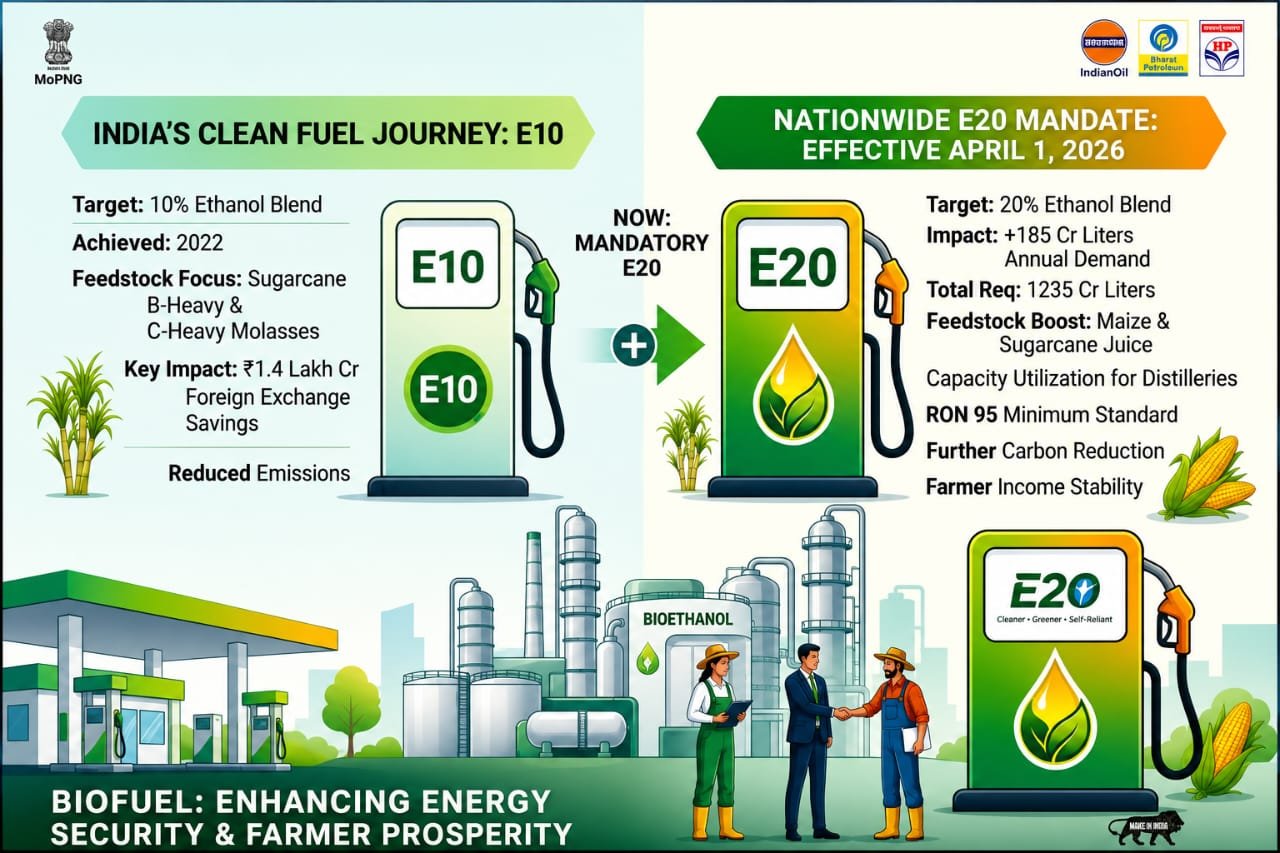
The transition to E20 fuel, which contains 20% ethanol and 80% petrol, has become an important part of India’s automotive and energy policy. The government has introduced this initiative to reduce dependence on imported crude oil, lower carbon emissions, and promote the use of renewable energy. Although the transition offers several environmental and economic benefits, it has also raised concerns within the automotive industry.
One of the major concerns is vehicle compatibility. Many older vehicles were designed to operate on conventional petrol and may not perform efficiently with E20 fuel. Higher ethanol content can affect engine components such as fuel pumps, fuel injectors, rubber seals, and metal parts, leading to increased maintenance costs. As a result, vehicle manufacturers must redesign engines and fuel systems to ensure compatibility with the new fuel.
Another challenge is the financial burden on automobile manufacturers. Companies need to invest in research, testing, and technological upgrades to produce E20-compatible vehicles. These additional costs may eventually increase vehicle prices for consumers. Small manufacturers may face even greater difficulties in adapting to the new standards.
Fuel efficiency is another issue associated with the transition. Ethanol contains less energy than petrol, which may reduce a vehicle’s mileage. Consumers may experience a slight decrease in fuel efficiency, raising concerns about long-term operating costs. In addition, the large-scale production of ethanol requires significant agricultural resources, including water, land, and crops such as sugarcane and maize. This could create pressure on food production and agricultural sustainability.
Despite these concerns, the E20 fuel transition represents an important step toward cleaner transportation and greater energy security. Successful implementation will require collaboration among policymakers, automobile manufacturers, fuel producers, and consumers. With proper planning, technological improvements, and infrastructure development, India can overcome these challenges and achieve a smoother transition to E20 fuel.


